
LANE MEADOW POLLINATOR BLEND
The reasons for having a diverse spectrum of native plants is
simple. The goal of a pollinator garden is to provide habitat for
our native bees, birds, hummingbirds, butterflies, from sequential
flowerings over the length of an entire growing season. As
lawngrass monocultures convert to native plantings, a framework
grows for countless species to become an ecosystem that joins
native flora and fauna. Healthy soil grows healthy plants and
better habitats for each level of the ecosystem. An essential film
of mycorrhizal fungi inhabits all plant roots. This Pollinator
Blend creates a webbing, mycorrhizae, where many organisms
collaborate for soil health and of course, plant health. Soil
minerals for plants from these essential mycorrhizal fungi both
mine and then exchange soil minerals for their host plant for its
sugars from photosynthesis throughout the year. Healthy root
systems in such polycultures contain more carbon-sink above and
below ground level.
Seasonal precipitation entering the soil is
retained in humus from this association of soil, mycorrhizae, and
plants capturing sunlight. This creates avenues for seasonal water
to enter the soil with less need to irrigate in summer or supply
extra fertilizer and accomplishes an early step toward sustainable
goals in your landscapes and you will likely hear more crickets as
well!
Sowing instructions for your “Meadow
Pollinator Blend”
• Packet size:
5 gm.
• Blend is a minimum 30 species,
approximately 2000 native seeds.
• This blend
contains approximately 1/3 native annual forbs, 1/3 native
perennial, and 1/3 native grass species.
•
Suitable for sites in western Oregon or Washington.
•
Blooming window from late winter through fall.
• Each 5 gm. bag will do an approximate 6’ x 6’
area. This is approximately 40-50 seeds/sf.
•
Soil preparation should be shallow yet still make contact with
seed surfaces.
• An occasional bark dust
covering is recommended to add fresh carbon and nutrients in
advance of future growing seasons.
For best results, sow
seeds on loose, weed-free soil in fall (September-November). To
ensure uniform distribution, mix the seeds with a lightweight
carrier such as sawdust, sand, or perlite. When seeding/spreading,
gently create seed-to-soil contact being careful not to bury the
seed. Simply sprinkle loosely on lightly prepared soil surface.
The many species in the blend will succeed in multiple conditions.
There is frequently overlap of ideal growing conditions so you
will enjoy learning where each species is at home and growing
where they are planted. Some species require light for
germination. They are species for sites that naturally range from
Meadowscapes, Pollinator Gardens, Rain and Water Gardens, Woodland
Gardens, and even Rock Gardens. There are over 35 species in the
Lane Meadow Pollinator Blend.
•
This custom blend is cosmopolitan in its adaption and
approximately 1/3 annual native forbs, 1/3 perennial native, 1/3
native grasses.
• Please note: all species
are specific to several but not all site conditions as settings
overlap: deep woods, upland prairie, wetland prairie, pollinator
garden, rock garden, and so on. By including many diverse native
species it is difficult to not have a suitable match to various
conditions where plants will thrive.
• Seeds
will last several planting seasons if kept in a refrigerator and
dry. Keep seeds in the refrigerator but not with apples or pears
as they inhibit germination.
• Succession usually takes place.
That is, certain plants bounce out in year one, and by successive
years the different species follow with variety as in nature. The
only constant is change. Perennials will not bloom in year one and
some take several years of seasonal cycles of cold, wet, warm, and
so on. When perennials emerge in year one they usually flower in
year two and stay many years.
Species in the Native
Pollinator Meadow Blend
Clarkia amoena, Pearly
everlasting, Meadow checkermallow, Western red columbine, Yarrow,
Douglas aster, Oregon sunshine, Roamers fescue, California
oatgrass, River lupine, Slender cinquefoil, Sea blush, Western
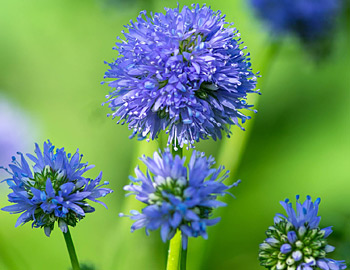
buttercup, Fragrant fringecups, Blue-eyed grass, Giant camas,
Self-heal, Madia, Goldenrod, California poppy, Largeleaf avens,
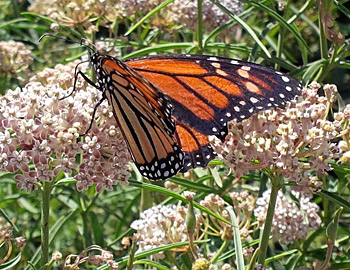
Showy milkweed, Cat’s ear, Gumweed, Seep monkeyflower,
Blanketflower, Slim leafed onion, Fernleaf buiscuitroot, Blue-eyed
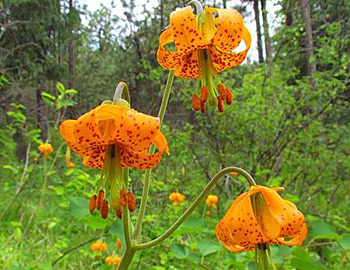
Mary, Meadowfoam, Douglas iris, Mule’s ear, Tiger lily, Daggerleaf
rush, Gilia. Percentages will vary within each 5 gram pack.